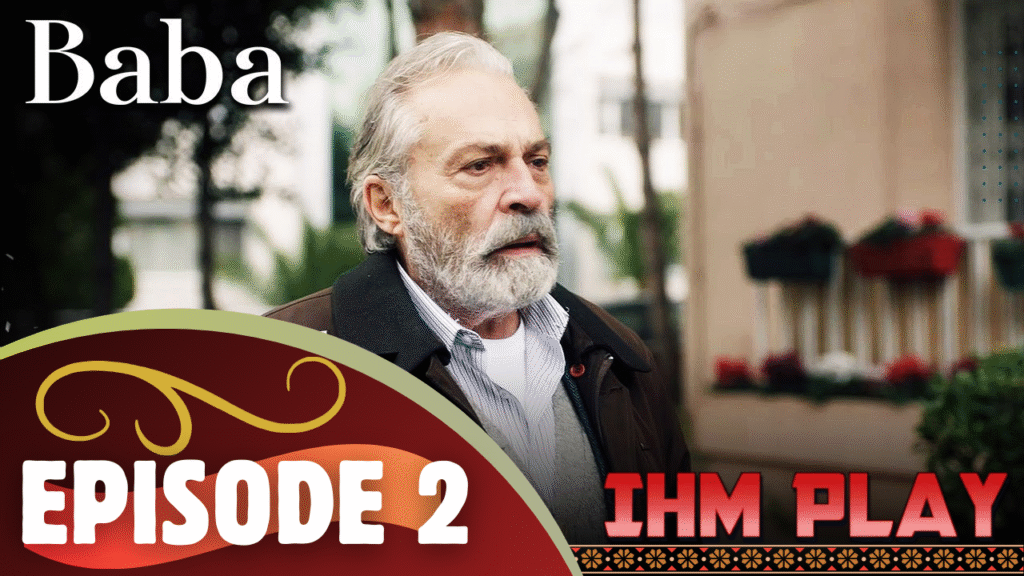
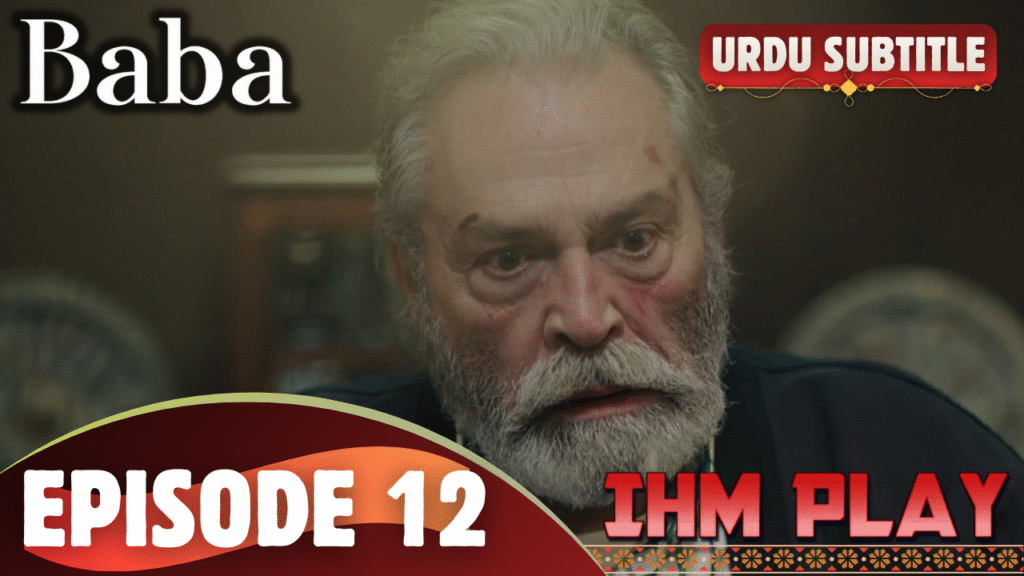
Baba Turkish Drama: An Intense Study of Family, Power, and the Burden of Fortune
The Turkish drama series Baba (The Father), which premiered on Show TV in February 2022, stands out as a layered exploration of family dynamics, generational conflict, and the corrupting influence of sudden wealth.
Headlined by Haluk Bilginer and Tolga Sarıtaş, the series intertwines emotional storytelling with social commentary, presenting a raw portrayal of a family torn between tradition and ambition.
A Story of Transformation and Loss
At its core, Baba follows the Saruhanli family, a conservative household from a small town near İzmir.
The family’s patriarch, Emin Saruhanli, lives by strict moral principles and commands deep respect in his community.
His life, grounded in order and simplicity, changes irrevocably when his estranged brother — one of Turkey’s wealthiest men — dies unexpectedly, leaving his entire fortune and corporate empire to Emin.
The Saruhanlis are suddenly forced to relocate from their modest home to the opulent world of Istanbul’s elite.
What seems at first like an unimaginable opportunity quickly becomes a crucible for the family’s identity.
The contrast between old-world morality and modern ambition forms the foundation of the series’ central conflict.
Central Characters and Their Conflicts
Emin Saruhanli (Haluk Bilginer)
Emin is the embodiment of authority and tradition. His life’s values are challenged by the materialism of Istanbul, and his decline is rendered even more tragic by his struggle with early-onset Alzheimer’s disease.
Bilginer’s performance captures the slow disintegration of a man who once controlled everything, but can no longer trust his own memory.
Kadir Saruhanli (Tolga Sarıtaş)
Recently released from prison, Kadir is both a product of his father’s rigid upbringing and his greatest opposition.
He represents the modern generation — defiant, emotional, and torn between rebellion and loyalty. His attempts to protect the family often put him in direct conflict with his father’s unyielding beliefs.
Büşra Saruhanli (Özge Yağız)
Büşra’s journey from innocence to independence is one of the series’ most well-developed arcs. Her complex relationship with İlhan Karaçam (Hakan Kurtaş) adds emotional balance to the family’s turmoil, contrasting love’s vulnerability with the ruthless pursuit of power.
İlhan Karaçam (Hakan Kurtaş)
As both rival and romantic interest, İlhan embodies moral ambiguity. His interactions with the Saruhanlis, especially Büşra, blur the line between manipulation and affection, serving as a reflection of Istanbul’s sophisticated yet corrupt world.
Major Themes and Underlying Questions
The Fragility of Family Bonds
Baba dissects how quickly loyalty and love can fracture under pressure.
The Saruhanlis’ sudden access to power and wealth tests every relationship within the family, exposing insecurities long hidden by modesty.
The Corruption of Power
The drama portrays wealth not as liberation, but as erosion. It corrupts integrity, isolates individuals, and amplifies ambition at the expense of empathy.
Generational Division
Emin and Kadir’s ideological clashes mirror Turkey’s evolving social landscape — where the values of tradition confront the demands of a changing, modern world.
Redemption and the Search for Identity
Kadir’s attempt to redeem himself after prison, and Emin’s fading grasp on both his family and his mind, give the series its emotional gravity.
In Baba, redemption is rarely clean — it is painful, slow, and uncertain.
Critical Reception
Baba was met with a mixture of admiration and critique.
The first season was widely praised for its originality, cinematography, and strong ensemble performances.
Critics highlighted Haluk Bilginer’s controlled intensity and Tolga Sarıtaş’s emotional range as the heart of the show.
The chemistry between Hakan Kurtaş and Özge Yağız also received positive attention, adding a tender dimension to an otherwise tense narrative.
However, the second season divided audiences.
While performances remained exceptional, many viewers felt the writing drifted from its focused exploration of family into overly complex subplots.
Despite this, Baba maintained a loyal audience, drawn by its emotional realism and the depth of its characters.
Why Baba Matters
What makes Baba distinct is not its setting or plot twists, but its unflinching portrayal of the human cost of ambition.
It raises questions about legacy, control, and the boundaries of love.
Through its characters, Baba explores what happens when principles meet privilege, and whether morality can survive in a world ruled by power.
While its second season may have faltered in structure, Baba remains a significant contribution to the Turkish drama landscape — a story that examines not just wealth and family, but the quiet tragedy of losing oneself in pursuit of success.
Conclusion
Baba is more than a television series — it is a mirror reflecting how fragile the balance between love, pride, and survival can be.
With exceptional performances and a storyline rooted in moral complexity, it captures the timeless struggle between holding on to values and surrendering to circumstance.
For those drawn to intense, character-driven narratives that question the meaning of power and family, Baba stands as a drama of rare emotional depth — a story that reminds us that even the strongest families can fall apart when faced with fortune.